
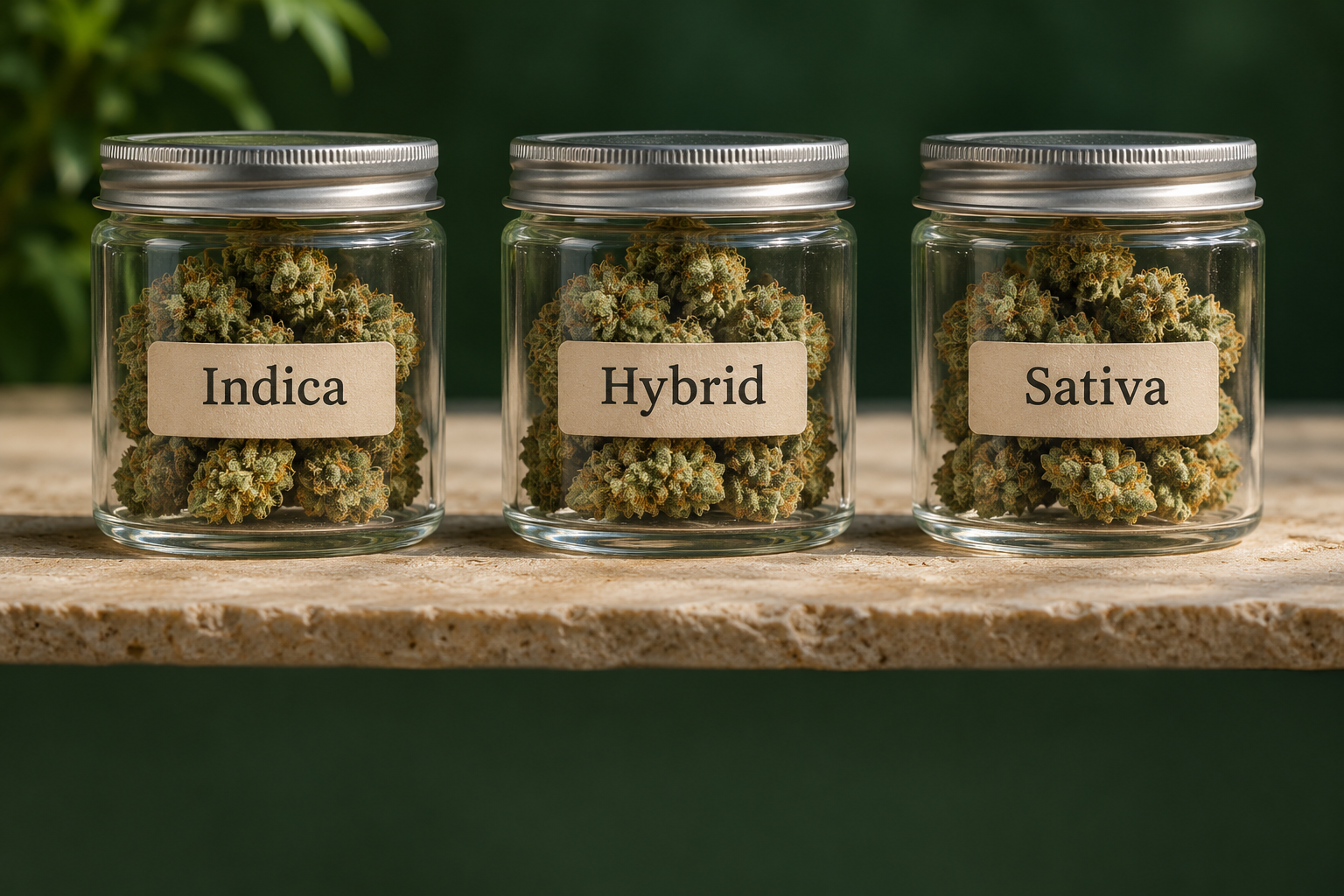
The descriptions people recognize
Indica is commonly associated with a more relaxing, physically heavy, or sleepy experience. Sativa is commonly associated with feeling more alert, mentally active, or energetic. Hybrid covers products described as having a mixture of those characteristics.
These descriptions reflect familiar consumer reports and retail conventions. Someone who repeatedly prefers indica-labelled flower has a useful preference to discuss. Someone else may find that THC amount, a particular product, or the setting makes a bigger difference than the category.
A shared vocabulary can help explain what you mean. It becomes less dependable when it is treated as a promise that every product in a category will feel the same.
How plant names became menu categories
Indica and sativa began as botanical names. Over time they have been used to describe ancestry, plant shape, growth habits, and, eventually, expected effects. The way they appear on a dispensary menu brings those different meanings together.
Modern breeding has mixed many cannabis lines, which explains the abundance of hybrids. A producer may call a product indica-dominant or sativa-dominant based on its reported ancestry or characteristics.
An indica/sativa percentage is a producer's classification, rather than a measured proportion of the effects you will feel. Two products described as indica-dominant can have quite different chemistry.
Your experience belongs in the conversation
If certain products consistently feel different to you, that is worth noting. You can prefer the experience of one flower over another without being able to name every compound involved.
The harder question is what explains the difference. THC and CBD amounts, other compounds, how much you use, tolerance, expectations, and setting may all contribute. A personal pattern can be useful even when the explanation is uncertain.
The most specific observation travels best: “This product from this producer felt heavier than that one” gives you more to work with than assuming every indica or sativa will repeat the experience.
What researchers have found
Research has found some associations between indica/sativa labels, particular terpenes, and reported effects. It has also found considerable overlap between categories. A 2021 study found that the labels did not neatly capture overall genetic and chemical differences, although certain aroma compounds were associated with the way products were labelled.
A 2026 systematic review likewise found inconsistent relationships between these labels, composition, and outcomes. Some individual studies reported differences; the overall evidence did not support reliable predictions from the category alone.
People can notice meaningful differences between products while the broad categories remain imperfect predictors. The label is useful context, particularly alongside a product you know, but it leaves much of the individual experience unexplained.
Use the label as one useful clue
For someone new to cannabis, or returning after a break, the THC amount and format deserve particular attention. A sativa label does not mean someone is unimpaired or safe to drive, and an indica label does not make a product a proven sleep treatment. All three categories can contain high-THC products.
Further reading
Check the source.
- Nature Plants: cannabis labelling and genetic and chemical variation (2021)
- Journal of Cannabis Research: indica, sativa, and hybrid systematic review (2026; early accepted manuscript)
- Research: consumer reports and expectations around indica and sativa
- Health Canada: what to know if you choose to consume cannabis