
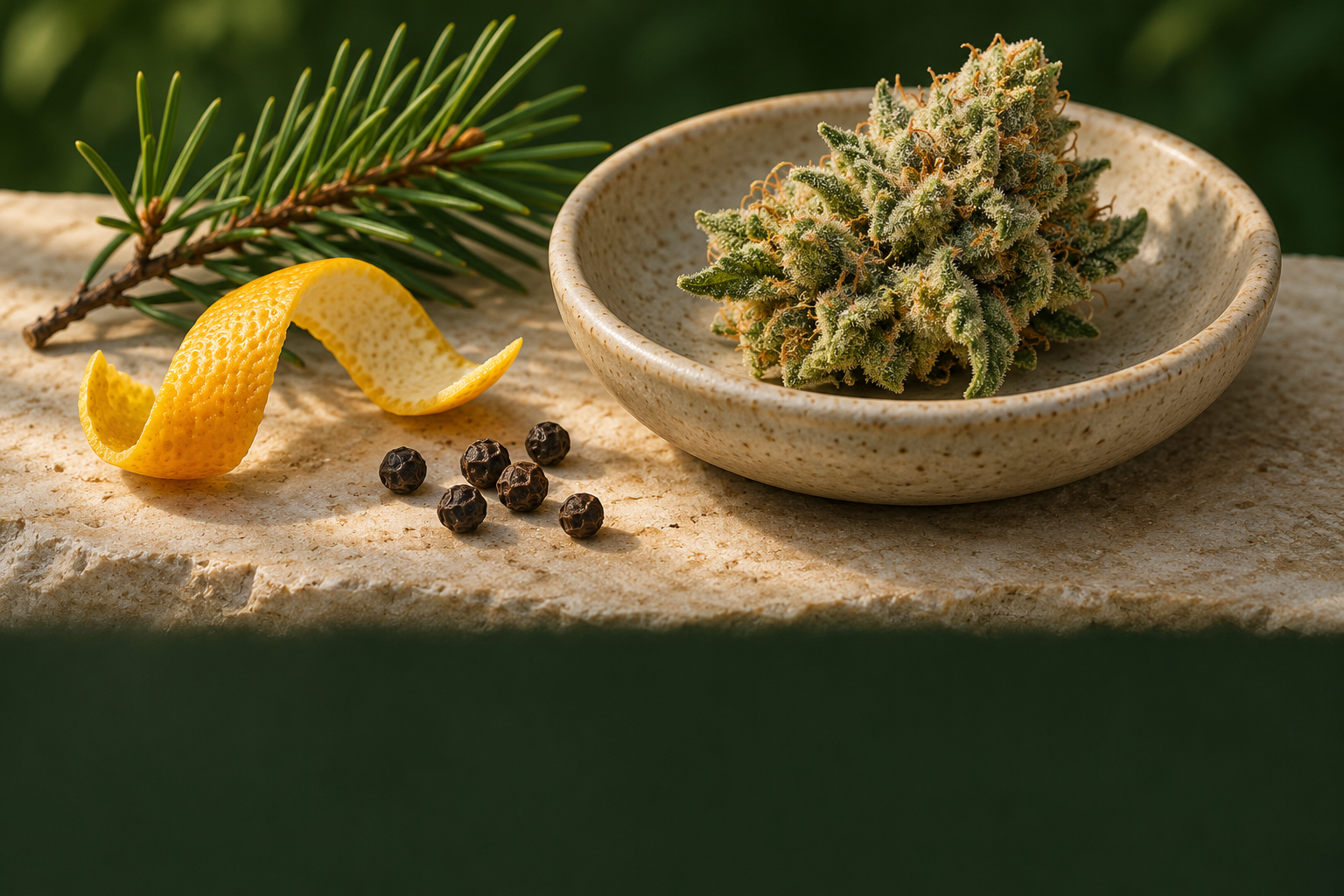
Where the aroma comes from
Terpenes are compounds produced by many plants. They contribute to familiar aromas in citrus peel, evergreens, herbs, flowers, and spices, as well as cannabis.
A cannabis aroma comes from a mixture of terpenes and other volatile compounds. That is why “citrus” can mean something quite different from one product to the next, and why two products with the same leading terpene need not smell identical.
THC and CBD are cannabinoids, measured separately. A terpene profile adds another layer of information about the product.
Six names you will see often
Limonene: Often associated with citrus notes.
Pinene: Often associated with pine and evergreen notes.
Myrcene: Frequently described as earthy, herbal, or musky.
Linalool: Often associated with floral, lavender-like notes.
Caryophyllene: Commonly described as peppery, woody, or spicy.
Terpinolene: Can contribute herbal, floral, pine-like, or fresh notes.
These are useful reference points rather than exact descriptions of every jar. The proportions and the rest of the aromatic mixture affect the overall impression.
How terpenes may contribute to the experience
People often associate particular aromas or terpene profiles with experiences they have had. Researchers are also investigating whether terpenes influence the effects of THC and other cannabinoids. There is more to explore here than smell alone.
A small controlled human study published in 2024 found that vaporized d-limonene reduced some anxiety caused by THC under particular study conditions. That is evidence of a specific interaction. It does not establish that ordinary citrus-smelling flower will reliably reduce anxiety, or that a retail terpene percentage can predict the result.
The phrase entourage effect is often used for possible interactions among cannabis compounds. It describes a research question, not one single effect shared by all products. Human evidence is still limited, and findings depend on the compounds, amounts, and conditions studied.
Reading a terpene percentage
Some producers list the leading terpenes and a total terpene percentage. This can help you compare products, especially when you already know an aroma profile you enjoy.
Look at both the mixture and the total. Two products with the same total percentage may have quite different aromas, and producers may test or report different sets of compounds. A higher total does not automatically mean a stronger smell or a better product.
Drying, packaging, storage, and time also affect aroma. Batch-specific information is useful when available, particularly if you are comparing a new package with one you remember.
Terpenes in extracts and vapes
Some extracts retain aromatic compounds from the source cannabis. Other formulations add terpenes during production, which can change or restore the aroma after processing.
Cannabis-derived terpenes come from cannabis. Botanical terpenes generally means terpenes sourced from other plants. A limonene molecule is the same compound whichever plant supplied it, although the mixtures and other ingredients can differ. The source alone does not establish a product's safety.
“Live” generally refers to freshly frozen starting material, while “full-spectrum” describes an aim to retain a broader range of compounds. The producer's information and ingredient list can help explain what those words mean for a particular product.
Follow the patterns you notice
Those notes can help you find familiar characteristics and discuss options in store. They will be most useful when tied to specific products, rather than assuming one terpene explains everything.
Further reading